
Dear reader,
A dilemma I face consistently is "What do I write about this week?"
This is caused not by a scarcity of ideas, but by my inability to pick the one worth sharing. I have a lot of thoughts, but a majority of them are scattered; each is significant in its own way but not significant enough to be the focus of this newsletter.
Now, it may be appropriate if I figured out a way to connect them under a streamlined theme, but building relationships between these idea nodes, I consider, is a huge undertaking.
Recently, however, I have gotten back to using a tool that had been my "digital brain." While I'm not particularly a fan of the term, I haven't found a better way to describe it.
The tool I'm talking about is Obsidian.
If you've been around for a while, you will remember that it was my preferred note-taking app. And I'm happy to report that it is still as useful as I had originally found it.
I had almost forgotten that there was a feature called "Graph View." It connects ideas as you continue to link them, and after a while, you will have built something like this:
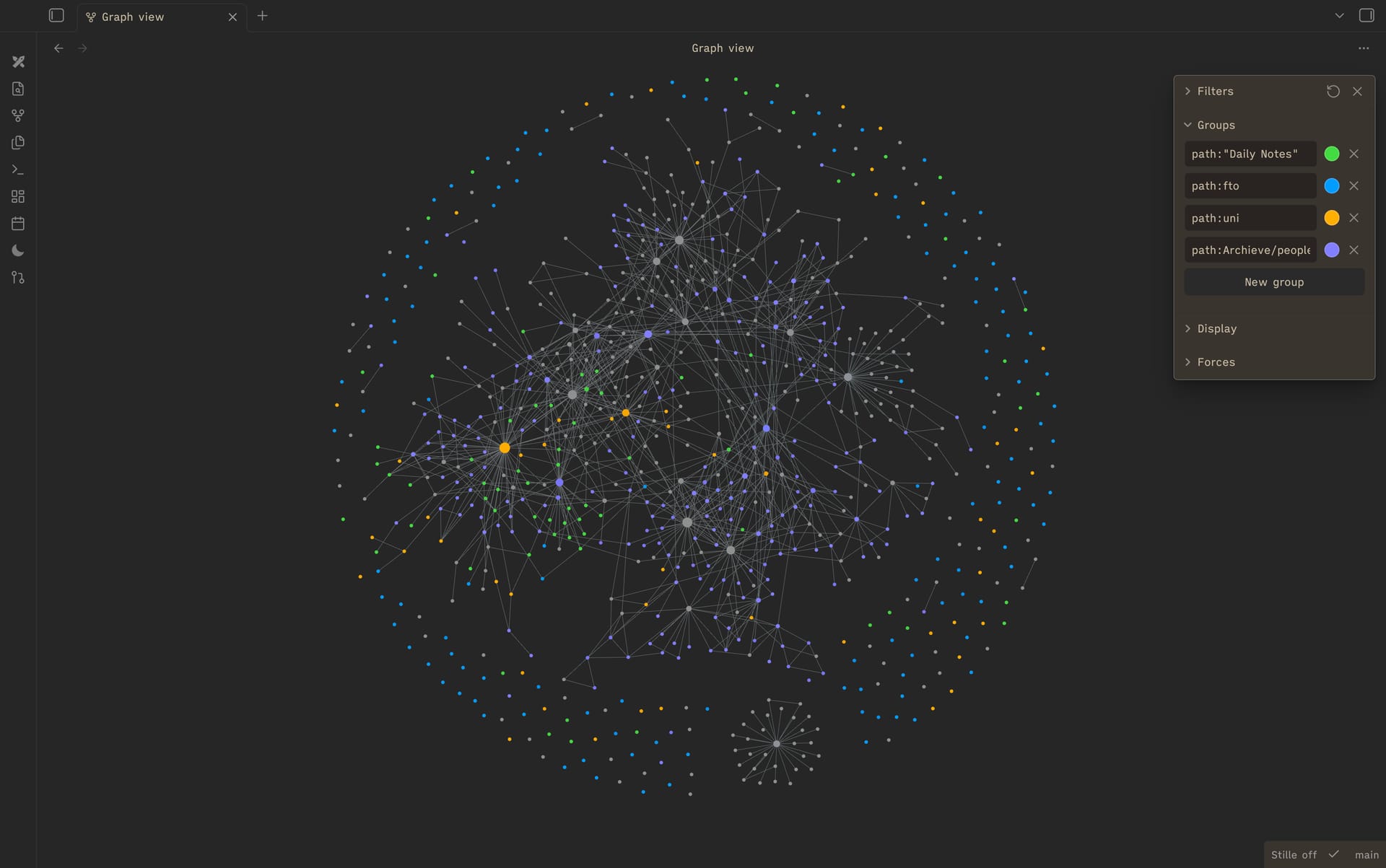 All the dots that you see in the image are files I have created over time; all the lines in between are the connections between those things. If I were to zoom in, you'd see something like this:
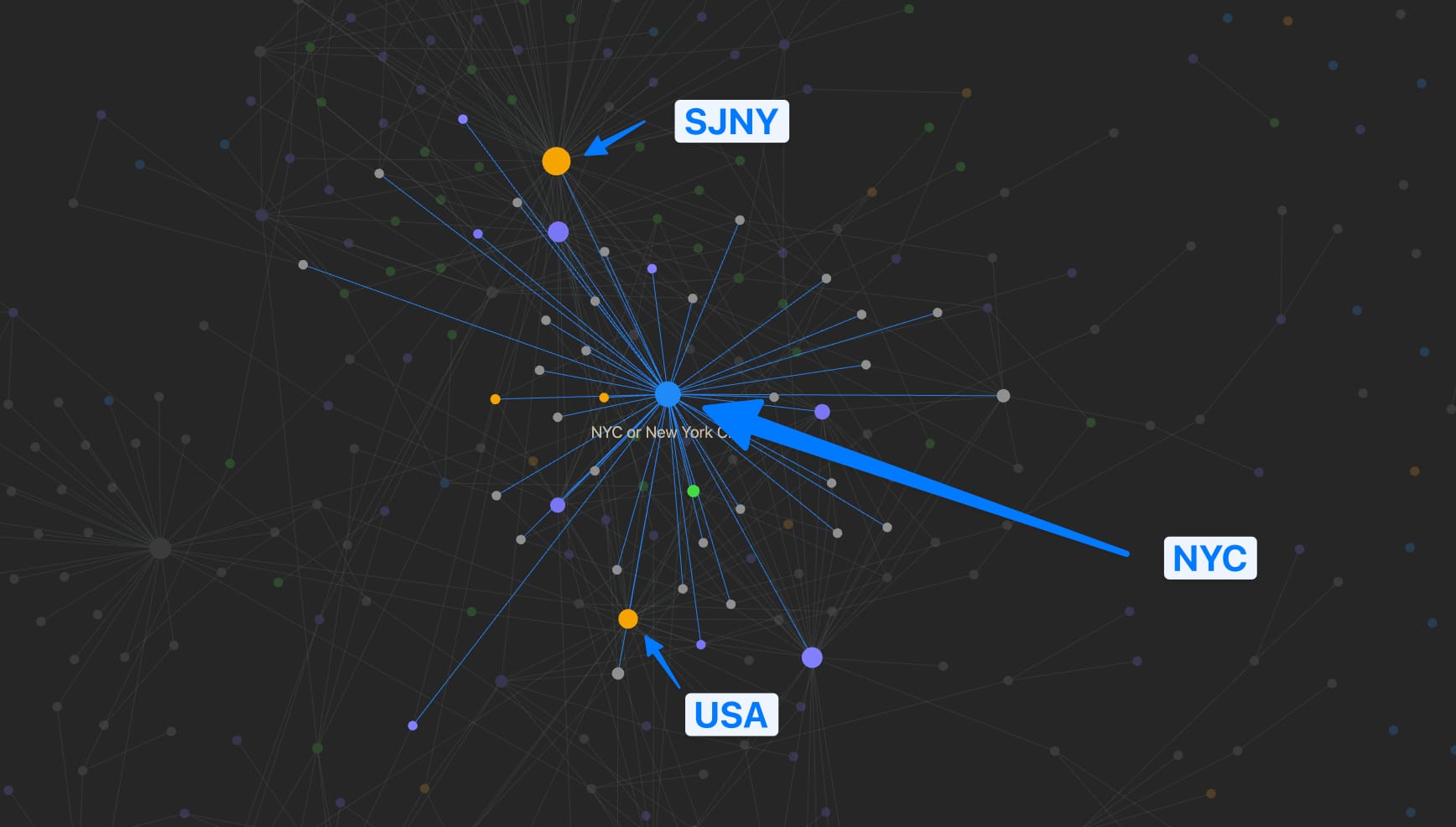 For privacy reasons, I didn't zoom in too much; otherwise, you could see all the file names, but all the bigger nodes are the files that are linked to more and more.
The "NYC" node has a lot more connections than the "USA" node because NYC has been more important for me since that's where I live, and the smaller nodes are comparatively less connected. There are also some nodes that have no connections, but those typically reside towards the outer border of the graph (see image 1).
Going through my knowledge graph has been a fun activity, because they also hold a good chunk of my memories.
The best thing about Obsidian is that it is open-source, free, and has a very active community of people that continue to build community plugins to make it more useful. It starts as a very light and simple note-taking app, but you have the option to add as many and as complex plugins as you want to make it exactly what you need.
If you're interested, I made a video diving deeper into how I use Obsidian. The video is about a year old at this point, but my workflow has remained largely the same.
If you are open to trying a new app, I'd recommend you give it a try. It's a simple yet powerful app which I've found to be very useful in my own toolkit.
I will see you next week.
Warmly,
Suraj